
For Tofu Lovers – Taste the Difference –
Published: September 3, 2026
※This article is based on a piece originally published in March 2018 and has been updated with information current as of July 2026, as confirmed with the store.
※Prices are subject to change from those in effect at the time of the interview. Please contact the store directly for the latest information.
“Tofu” (bean curd) is that quintessentially Japanese food that many non-Japanese either love or wonder what the fuss is all about. I must confess that I lean toward the former, and Toyoda-ya Tofuten is one of the reasons why.
Now in its fiftieth year of operation, Toyoda-ya Tofuten is run by the delightful father-and-son team of Mr. Katsuyuki and Mr. Katsutoshi Hiyama. Located a bit off the beaten track, in Higashisuna, close to the Arakawa River, this shop exemplifies the small family-run enterprises which have existed for several generations and which are to be found throughout Koto ward.
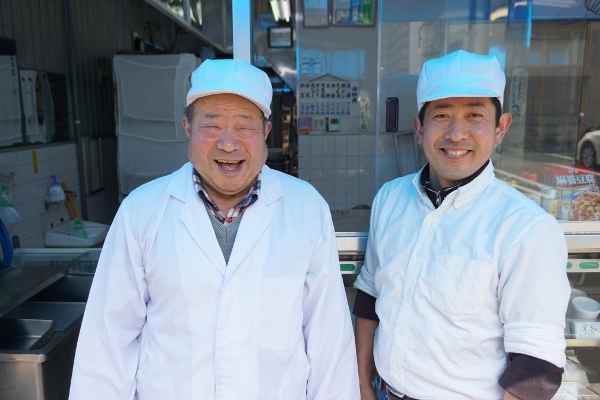
Mr. Hiyama senior’s working life started in a tofu shop run by an aunt, one of four tofu shops owned by relatives, which have all since closed following their owners’ retirement; he says there are only about fourteen shops left in Koto ward still making tofu. Talking to the Hiyamas, while sipping tea and trying various servings of tofu offered to me, I realised that being a tofu maker is not a career choice for anyone who enjoys the nightlife; they are up at 2:30 a.m. most mornings to start making the day’s tofu at 3:00 a.m., so that it is cool, fresh and ready for when the shop opens at 6:00 a.m. A break is taken around lunchtime, before the afternoon shift, which continues until around 7:00 p.m.
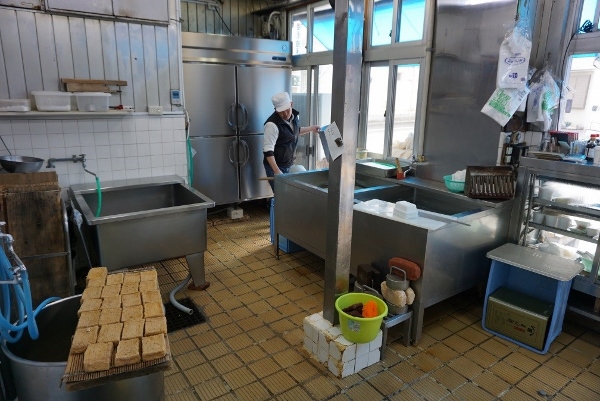
I should have liked to watch the tofu being prepared, but would have had to make my way over to Higashisuna in the early hours of the morning to do so; by the time I arrived for the interview, the day’s batches of tofu had been made and the shop cleaned up afterwards.
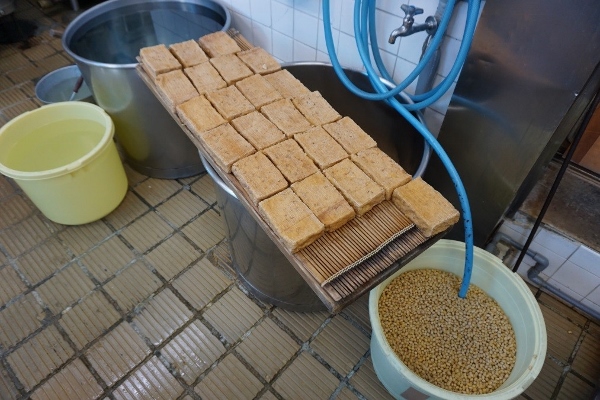
Instead, the younger Mr. Hiyama walked me through the process of making tofu. The ingredients are simple and natural; soy beans and water, lots of it (the shop floor seemed to have been awash before I arrived), with some calcium sulphate added to harden the tofu. First, the soy beans are washed and boiled until they become soft,
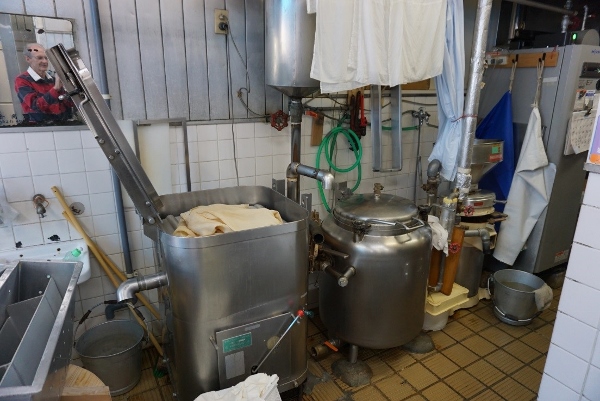
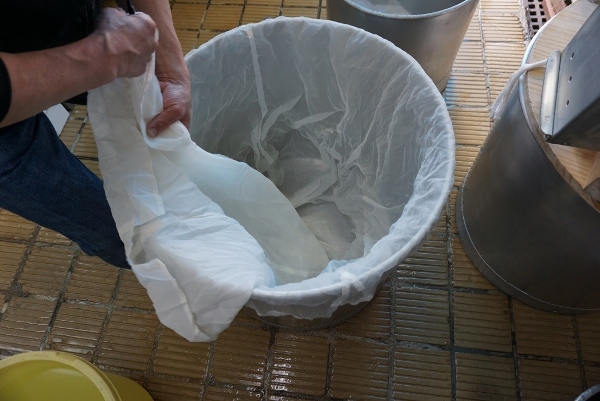
…at which time they are poured into gauze sheets and squeezed and pressed to extract the soy liquid, to which is added the hardener.
This is all hand-stirred and then broken up and scooped into moulds and allowed to harden into large white blocks.
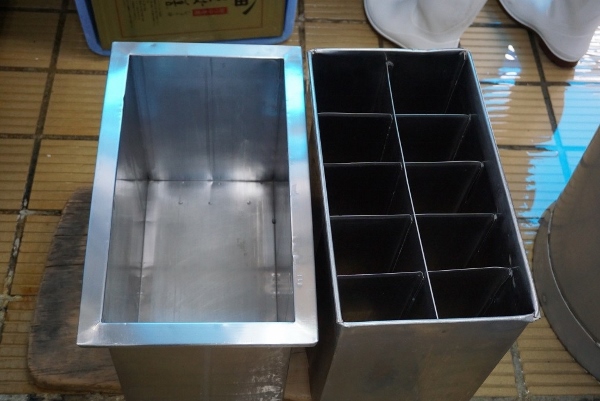
At this stage the tofu is still hot and needs to be cooled to await the day’s customers. The tofu is then cut into individual 400 gram blocks.
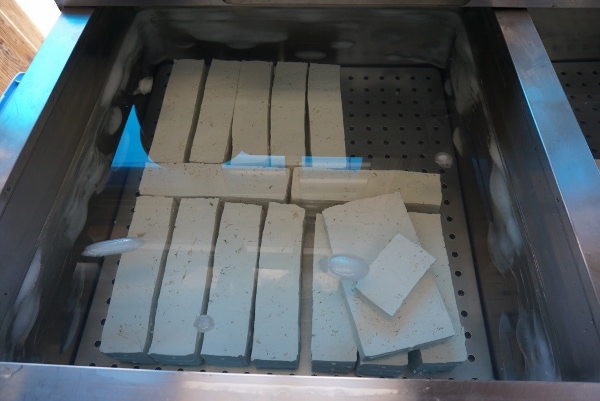
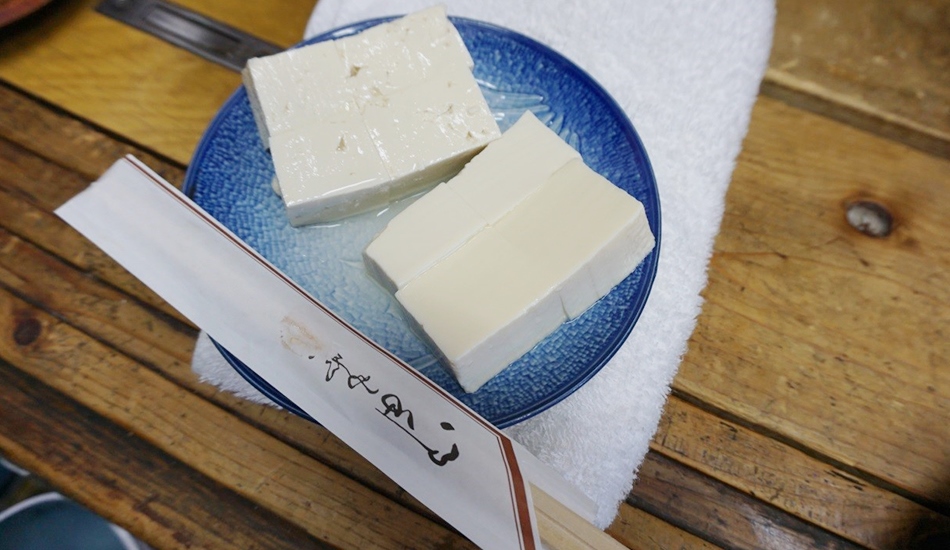
Three separate grades of tofu are produced, depending on the level of straining through the gauze sheets and pressing: “momen” (cotton – left below), “kinu” (silk – right below),
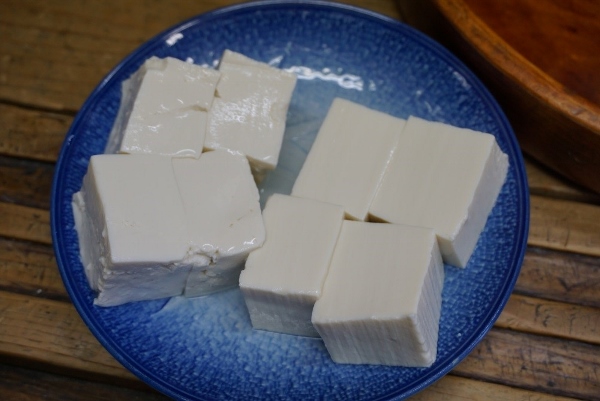
…and the soft pudding-like “oboro” (misty or dream-like).
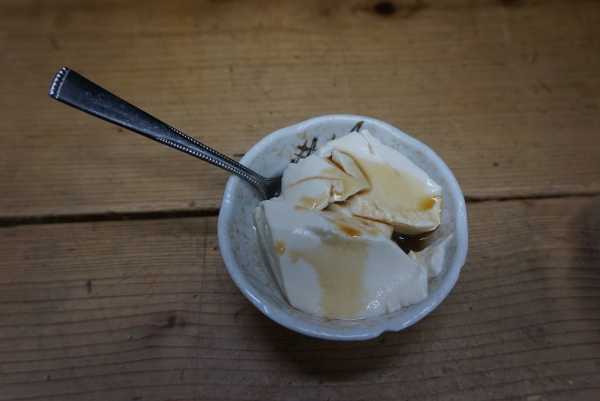
The kinu has a “sappari” (clean and refreshing) taste, while the momen has what is known in Japanese as “koku”, referring to a richer, more full-bodied flavour. I noticed that the tofu made by the Hiyamas is firmer and contains less liquid than the tofu I usually buy at supermarkets. It also didn’t break apart when I tried to pick it up with chopsticks, something that can be surprisingly tricky when it comes to tofu. Mr. Hiyama, the father, recommends eating the tofu within two days of purchase.
Toyoda-ya’s products consist of not only “plain” tofu, but also “tōnyū” (soy milk),
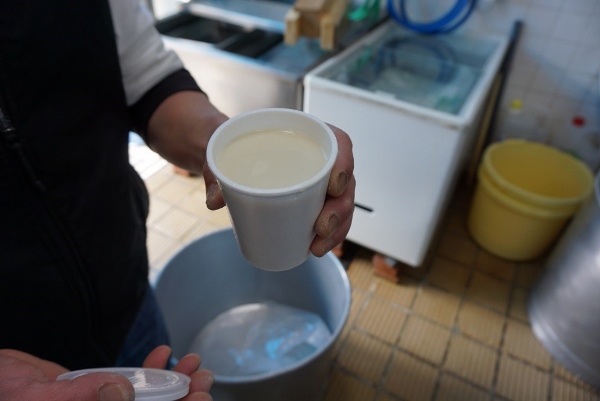
…“atsu-age”/ “nama-age” (thick deep-fried tofu),
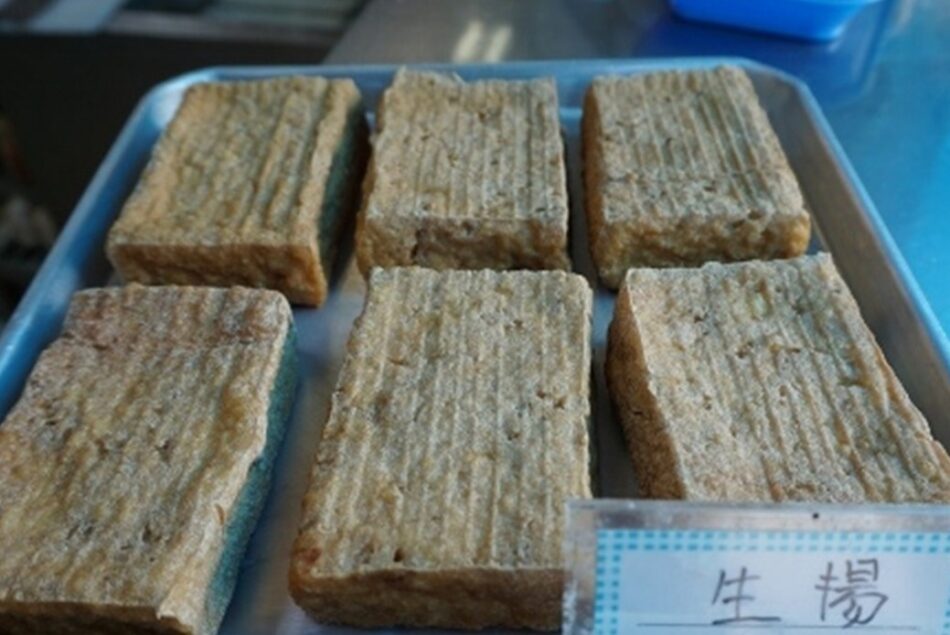
…“abura-age” (fried tofu), and
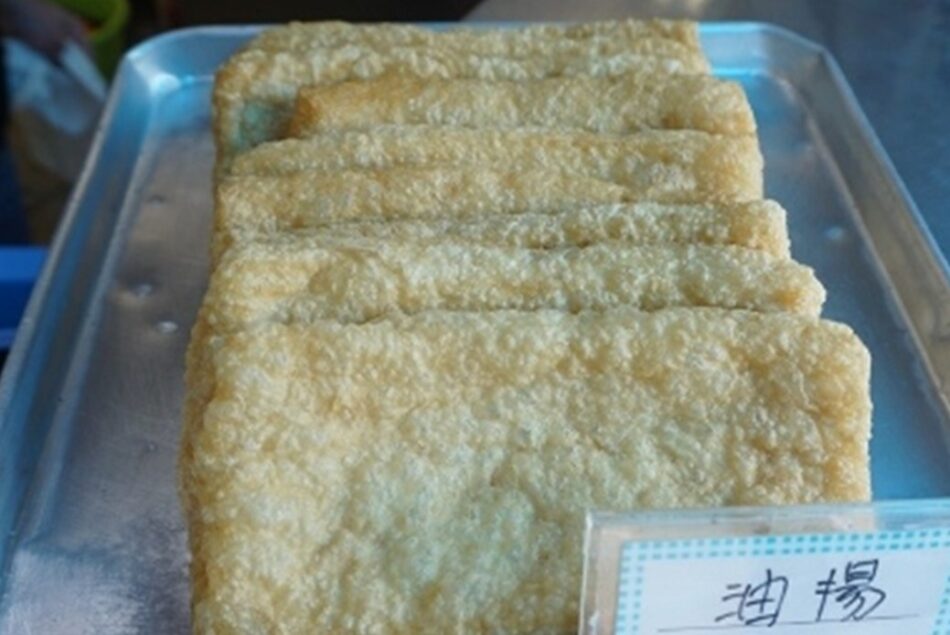
… “ganmodoki” (deep-fried tofu mixed with thinly-sliced vegetables),
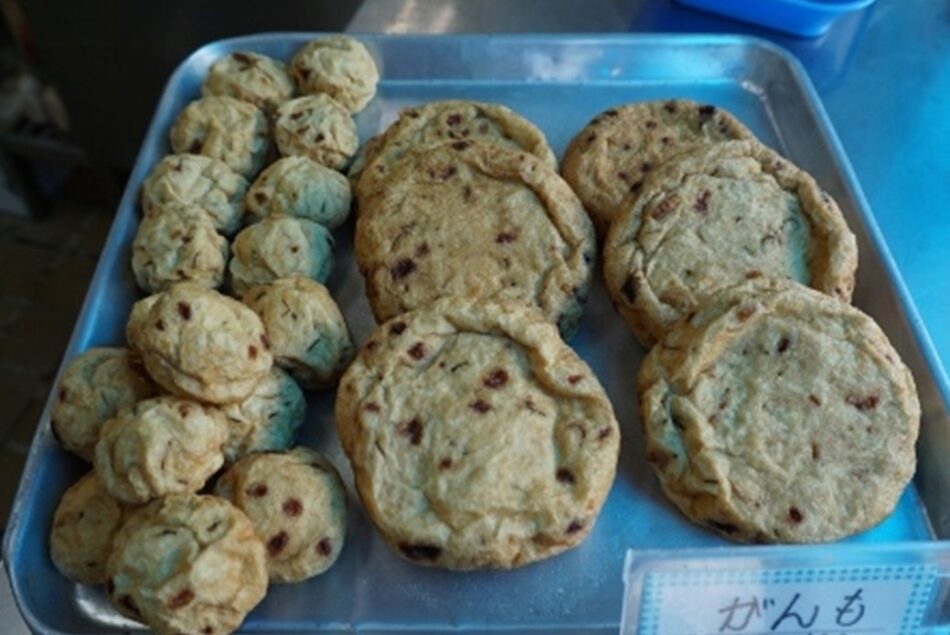
…all of which are made on site.
The Hiyamas’ customers typically range from young families to older residents, while a number of retired men stop off during their daily walks to buy some soy milk. Toyoda-ya also regularly delivers tofu as part of school lunches to a number of schools in Koto Ward, as well as to local shops, while staff from local izakaya, ramen shops and yakitori restaurants also drop in to buy tofu products for use in their menus.
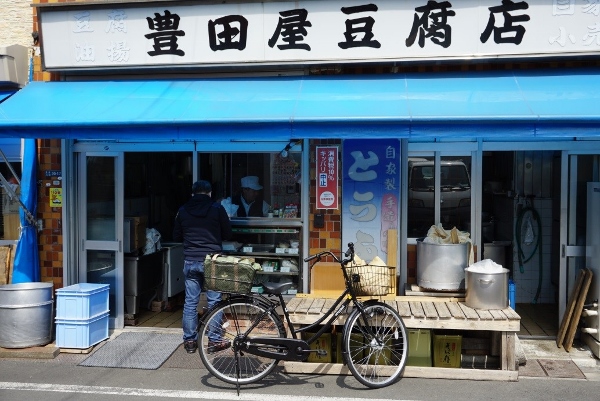
The younger Mr. Hiyama says that as the tofu is handmade, each batch can taste subtly different, depending on the origin of the soy beans, the amount of water and hardener used, as well as the level of squeezing and sifting.
As I was leaving, a healthy-looking lady in her 60s arrived and enthused to me in English about the shop’s tofu. “It’s delicious”, she said as she cycled off down the road. I totally agree with her.
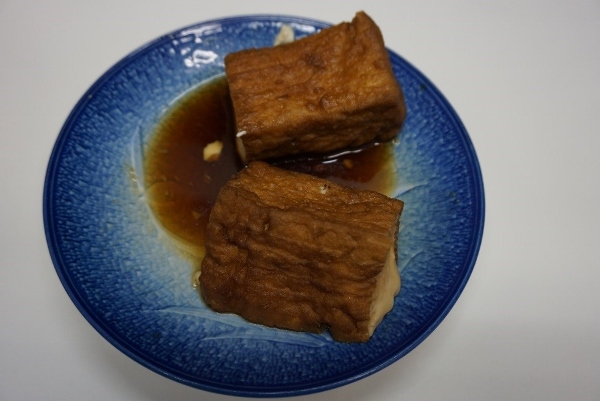
Story and Photos by Jeremy Hutchinson
※Information is based on July 2026. Prices, operating hours, and other details may change. Please verify with the store directly.
