
Twelve Years Later: Still a Welcoming Place to Talk About Inheritance
Published: November 17, 2026
※For this article, we conducted a follow-up interview and will focus on new initiatives and changes that have taken place since our previous coverage.
※Prices are subject to change from those in effect at the time of the interview. Please contact the store directly for the latest information.
Back in 2014, we visited the Kameido-Kinshicho Inheritance Support Center (Hiroshima Accounting Office) to introduce its approach to shukatsu (end-of-life planning). Twelve years have passed, and we returned to see how the center has changed.
Inheritance can feel complicated, and many people are unsure where to begin. But as we spoke with the staff, one thing became clear: you don’t need to have all the answers before coming in. Sometimes, the first step is simply talking to someone about your concerns.
◆49 Years of Supporting the Local Community
The Kameido-Kinshicho Inheritance Support Center is run by Hiroshima Accounting Office, which has served the local community for 49 years. Today, the center receives more than 120 consultations each year, mainly from residents of Koto, Sumida, and Edogawa wards.
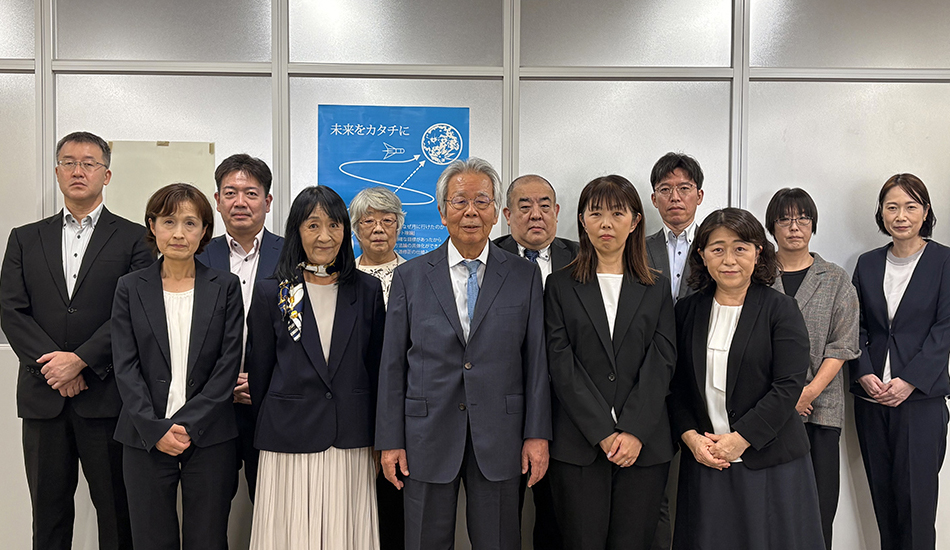
The accounting office has 12 staff members who work together to support people seeking advice about inheritance matters.

▲ The staff who support inheritance consultations in the community.
◆What Has Changed and What Hasn’t
When asked what had changed over the past 12 years, Ms. Hirabayashi’s first response was simple:
“Not much has changed.”
Still, some things have.
Twelve years ago, many adult children found it difficult to bring up the subject of wills with their parents. According to Ms. Hirabayashi, that began to change around seven or eight years ago, as shukatsu became more widely known in Japan. More people in their parents’ generation started thinking about how they wanted to pass on their assets and preparing for the future themselves.
Listening to Ms. Hirabayashi, I got the sense that more people are becoming comfortable with the idea of preparing for the future themselves.
Changes in the law and administrative systems have also affected inheritance procedures. The basic exemption for inheritance tax was reduced in 2015. Then, in 2024, a new system made it possible to obtain certain family register certificates from local government offices, even when the records are held elsewhere in Japan.
“My work has become much easier,” says Ms. Hirabayashi, referring to the new system for obtaining family register records.
She has also noticed that more people now research inheritance matters online before seeking advice. Some even obtain an official document known in Japan as a certified copy of the legal heir information chart before visiting. Certified by the Legal Affairs Bureau, the chart shows how the deceased person and their legal heirs are related.
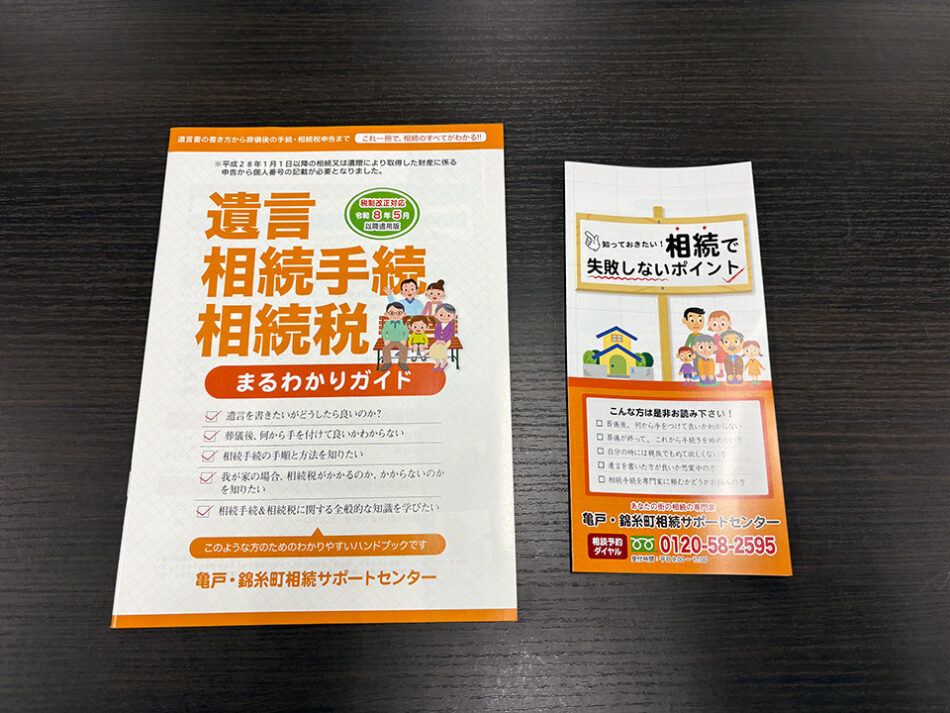
▲ The current brochure, designed to make it easier for people to take that first step toward a consultation.
◆It’s Okay If You Don’t Know Where to Start
“Since it’s something you may experience only once or twice in your life, it’s perfectly natural not to know what to do,” says Ms. Hirabayashi.
Ms. Hirabayashi adds, “There’s nothing embarrassing about asking. That’s what we’re here for.”
That’s why people don’t need to prepare a list of questions before coming to the center. They can simply start by talking about whatever is on their mind.
For example:
・Will I have to pay inheritance tax?
・Do I need to make a will?
・How do I transfer ownership of a property?
・What should I be doing to prepare for the future?
The staff listen to each person’s circumstances and help them work out what needs attention.
The initial consultation is free and lasts 30 minutes. With a Kotomise coupon, it can be extended to 45 minutes.
◆Inheritance Isn’t Just for People with Large Estates
Many people assume that inheritance only becomes an issue when a family has substantial assets.
But inheritance involves more than taxes. Families may need to decide how to divide an estate, who will inherit the family home, or how property should be passed on.
According to Ms. Hirabayashi, some people come to the center only after the heirs have already agreed on how to divide the estate. In some of those cases, the inheritance tax bill could have been lower if they had sought advice beforehand.
The center helps people sort through the issues they face and understand what steps they may need to take.
◆While You’re Healthy, Take Stock of What You Own
When asked what people should do while they are still healthy, Ms. Hirabayashi’s answer came without hesitation:
“Make a will.”
Ideally, this would be a notarized will prepared under Japan’s notarial system.
For those who aren’t ready to make a formal will, an ending note—a document commonly used in Japan to record information about one’s assets and personal wishes—can also be a useful first step. Although it has no legal effect as a will, it can help organize important information and make things easier for family members later on.
The important thing is to understand what assets you own and who you would like to leave them to.
Ms. Hirabayashi often hears stories from people who struggle to locate bank accounts or other assets after a family member passes away. Even a single sheet of paper listing someone’s assets can make it much easier for family members to know where to start.
As a general guide, she suggests that around age 70 can be a good time to start thinking about wills and inheritance planning, while people are still able to make decisions for themselves.
◆Knowing When Legal Help Is Needed
Inheritance matters sometimes involve issues that go beyond tax.
The professionals the accounting office works with most often are judicial scriveners, specialists who handle procedures such as property registration.
If family members disagree about how an estate should be divided, they may need legal advice. An accounting office cannot represent heirs in such disputes, so clients may be directed to local government legal consultation services or the Japan Legal Support Center (Houterasu).
However, the center doesn’t simply turn people away when a matter falls outside its area of expertise. The staff first listen to each person’s situation, explain what they can and cannot do, and then discuss what kind of support may be needed.
At the same time, not every procedure requires professional assistance. In some cases, clients are given the information they need and encouraged to handle the procedures themselves.
As Ms. Hirabayashi says with a smile, “That doesn’t help our business, though.”
Some people who received help with one inheritance return when another inheritance matter arises in their family. Others later ask the office to serve as the executor of their wills.
For Ms. Hirabayashi, these continuing relationships are important.
The team values a professional relationship with clients—one built on trust, so they know they can turn to the center whenever they need help.
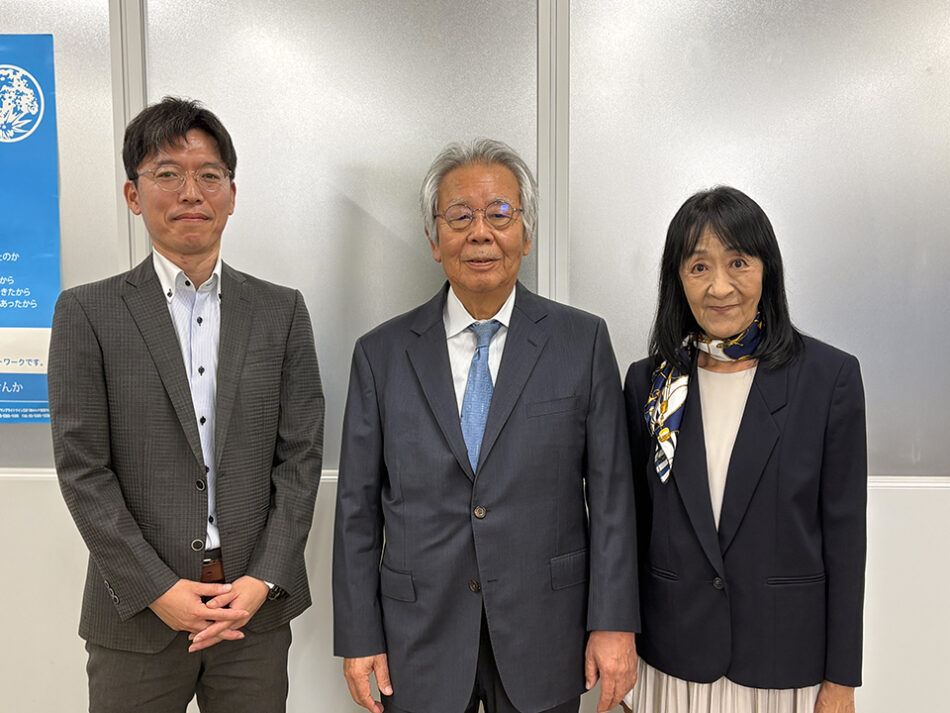
▲ From left: Mr. Saito, Mr. Hiroshima, the office director, and Ms. Hirabayashi
◆Taking That First Step
It can be difficult to think about inheritance, especially when there’s no immediate reason to do so. But you don’t need to wait until a problem arises or until you know exactly what to ask.
Whether you have questions about procedures, want to organize your assets, or simply have concerns about the future, the Kameido-Kinshicho Inheritance Support Center is there to help.
Twelve years after our first visit, I was struck by how the center continues to make inheritance consultations feel approachable.
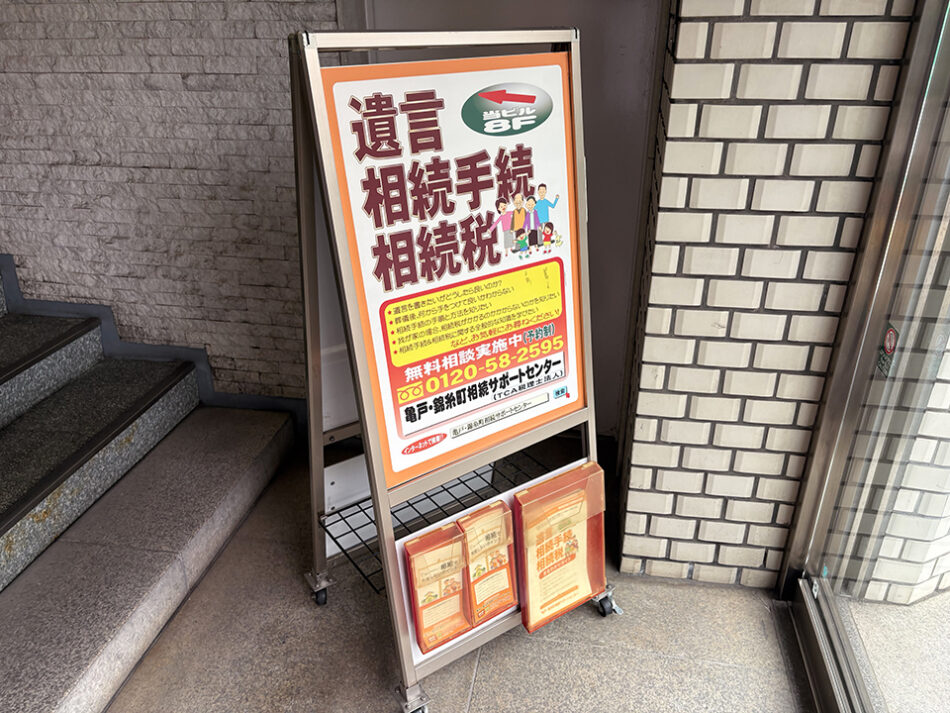
▲ The sign at the building entrance. Brochures are also available to take home
◆After the Interview
What stayed with me most was Ms. Hirabayashi’s comment: “It’s perfectly natural not to know what to do.”
Inheritance often seems like something that requires specialist knowledge, yet many people begin with little idea of where to start.
As someone in my thirties, inheritance still feels like something far in the future. Even during the interview, I found myself wondering what I should be thinking about now.
Ms. Hirabayashi was honest with me, even about things that wouldn’t bring the center any business. She explained that some people can handle property registration procedures on their own.
That honesty helped me relax and made inheritance feel a little less intimidating.
Rather than waiting until a problem arises, I left the interview thinking that a useful first step might simply be making a list of what I own and where it is.
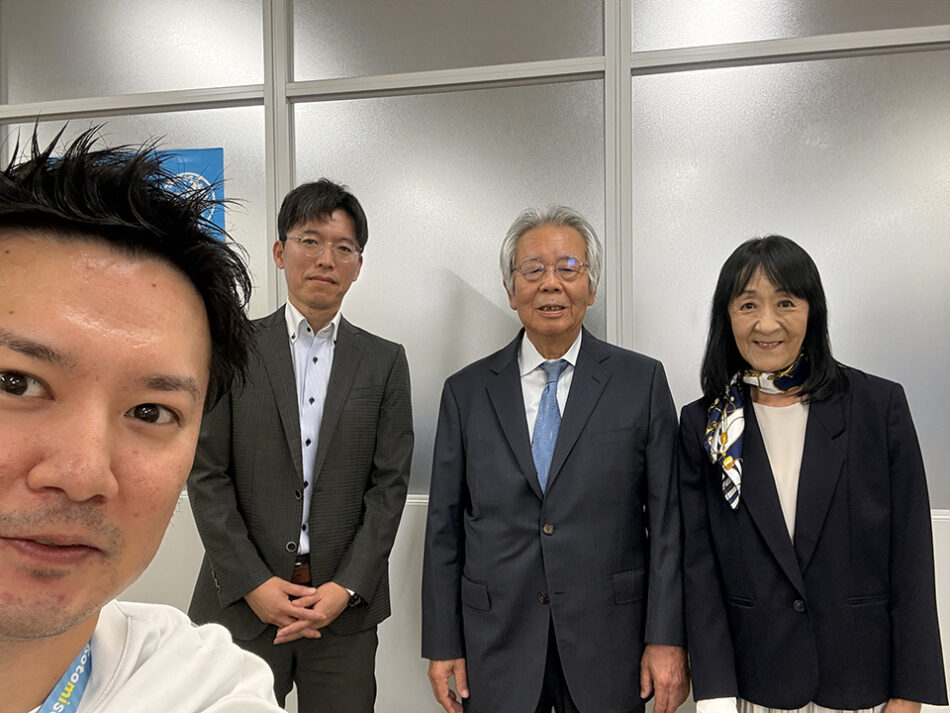
▲ One last photo together—with me in it, too. Thank you!
※Information is based on September 2026. Prices, operating hours, and other details may change. Please verify with the class directly.
※All amounts mentioned in the article are inclusive of taxes.
