
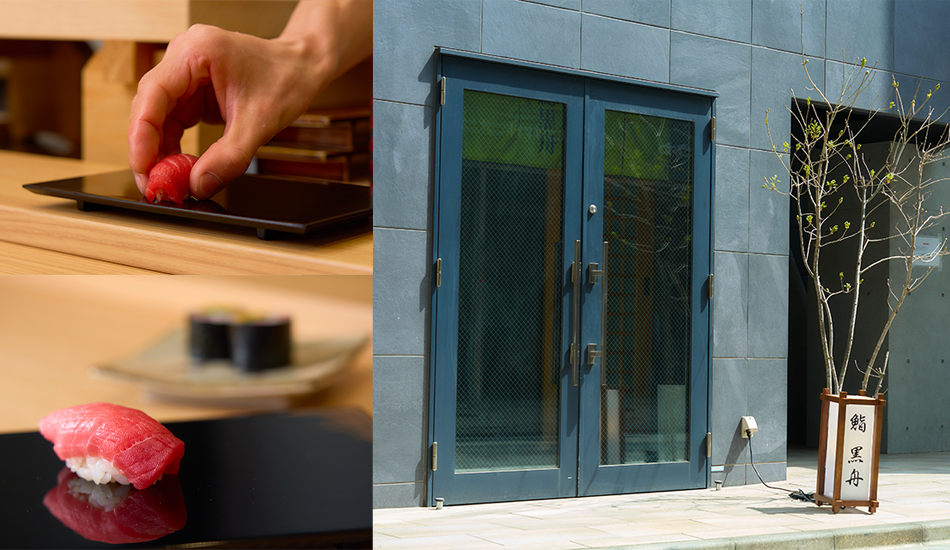
Crafting the Essence of Edomae Sushi, One Piece at a Time
Published: June 30, 2026
vol.2
※Prices are subject to change from those in effect at the time of the interview. Please contact the store directly for the latest information.
Just a short walk from Sumiyoshi Station, tucked away in a quiet residential neighborhood, you’ll find Sushi Kurofune.
Located on the ground floor of an apartment building, the restaurant maintains a discreet presence. There is usually no sign outside; only when business hours begin does a noren curtain and signboard appear, quietly announcing that the restaurant is open.
Without prior knowledge, you might easily walk past without realizing a sushi restaurant is there.
Step inside, however, and you’ll discover an intimate counter with just four seats.
Standing behind the counter is owner-chef Shota Ito. After gaining experience in various culinary fields, he found his true calling in the world of Edomae sushi—the traditional style of sushi that originated in Tokyo.
Discovering the World of Edomae Sushi
Ito’s journey as a chef began in his hometown of Mie Prefecture, where he trained at a traditional kaiseki restaurant. He later moved to Kyoto and worked at a French restaurant.
At the time, he had not yet decided what kind of restaurant he would eventually open or which cuisine he would dedicate himself to.
The turning point came when he visited Tokyo for training at the Ginza branch of the French restaurant where he was employed.
During his stay, he explored the city’s culinary scene and encountered Edomae sushi for the first time.
“It was completely different from the sushi I had grown up eating,” Ito recalls.
In many regional areas of Japan, sushi often focuses on serving fish at peak freshness. Edomae sushi, however, is built upon craftsmanship and preparation techniques that enhance the natural flavors of the fish.
Fish may be simmered, cured, marinated, or aged before being served.
Rather than simply presenting ingredients as they are, Edomae sushi emphasizes the skill of the craftsman in bringing out their full potential.
It was this philosophy that captivated Ito and ultimately led him to pursue a career in Edomae sushi.
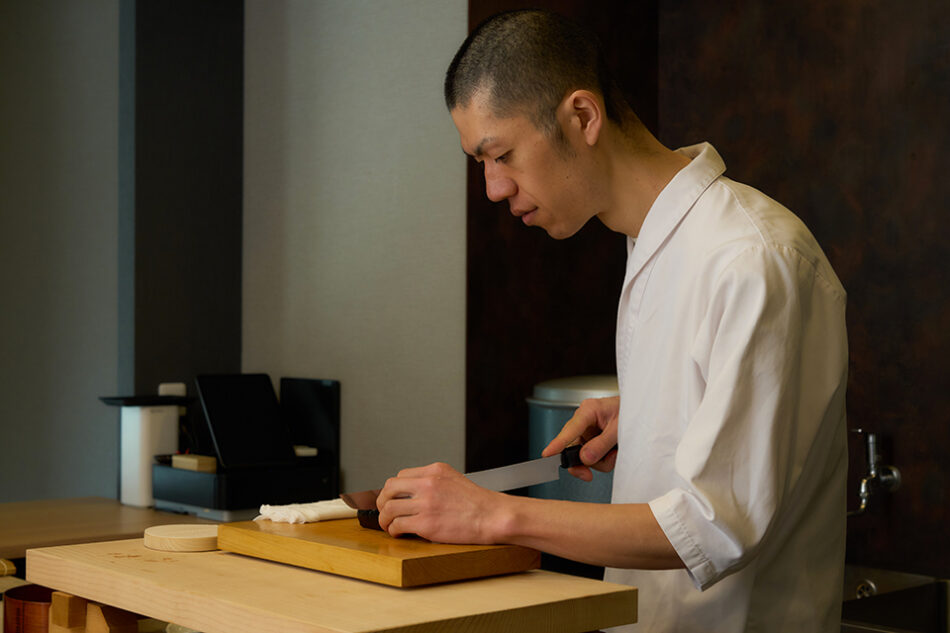
▲ Chef Ito carefully preparing ingredients with meticulous craftsmanship.
Kurofune: A Restaurant Born During the Pandemic
Sushi Kurofune opened in October 2021.
However, its original business model was completely different from what visitors experience today.
The restaurant opened during the height of the COVID-19 pandemic and operated exclusively as a takeout shop. In fact, the counter seating that exists today did not yet exist.
“We had no idea when we would be able to serve customers at the counter,” Ito explains.
With limited space and uncertain circumstances, opening as a takeout-only restaurant was the most practical choice.
In July 2023, as conditions gradually improved, Ito finally launched the counter-style dining experience he had envisioned from the beginning.
The current four-seat counter was added at that time.
The restaurant’s name, “Kurofune” (Black Ship), reflects its unique presence in the neighborhood.
“There weren’t many sushi restaurants like this in the area,” Ito says with a smile. “It’s like the arrival of the Black Ships.”
The name carries a touch of humor while symbolizing something new arriving in the community.
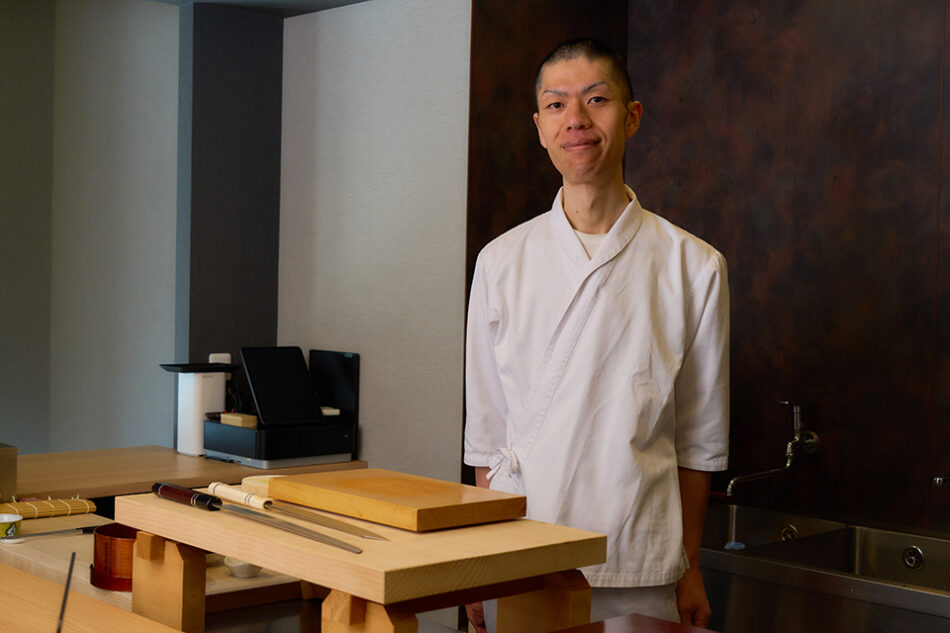
▲ Chef Ito. Throughout the interview, he greeted us with warmth and professionalism.
What Only Four Seats Can Offer
The restaurant features only four counter seats.
For private bookings, an additional seat can be added, allowing up to five guests.
Ito handles everything himself—preparing food, serving guests, and making drinks.
While it may sound demanding, the arrangement creates a uniquely personal dining experience.
At the same time, serving an omakase course while engaging with guests is no easy task.
He must constantly think ahead about the next dish, observe his guests, and prepare beverages, all while maintaining smooth service.
When all four seats are occupied, his attention is fully engaged.
Yet this intimate setting also allows him to tailor each dining experience to individual guests.
“One customer visited three times in a single week,” Ito says. “I changed the entire menu each time.”
Not only the sushi but also the accompanying dishes are carefully adjusted so that repeat guests can enjoy something different with every visit.
This level of attention is possible precisely because of the restaurant’s small size.
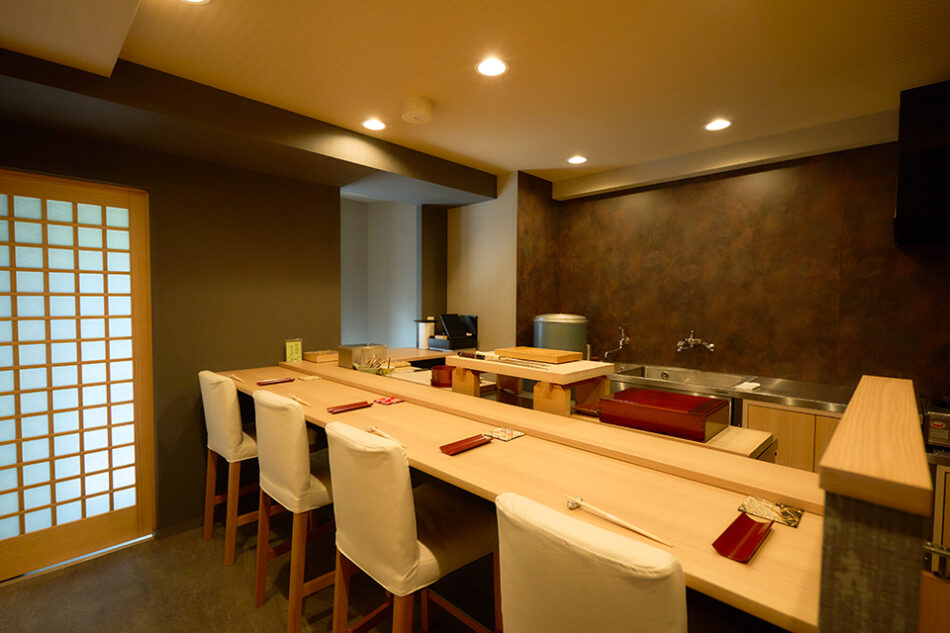
▲ With only four seats, guests can enjoy a relaxed and intimate dining experience.
When Fish and Rice Become One
One of the most memorable topics during our interview was Ito’s philosophy regarding nigiri sushi.
He pays close attention to how each piece of fish is sliced.
There is a specific reason why he avoids cutting fish too thick.
“If the fish is too thick, it doesn’t blend naturally with the rice,” he explains. “It feels like you’re eating the fish and the rice separately.”
For Ito, sushi is complete only when the topping and the rice become one.
Every detail—from the thickness and size of the fish to its balance with the rice—is carefully considered.
The result is a beautifully shaped piece of nigiri in which the fish seems to gently embrace the rice beneath it.
When placed in the mouth, the fish and rice come together naturally, allowing their flavors to unfold as one harmonious bite.
This seamless balance reflects the care and precision behind every piece of sushi served at Kurofune.
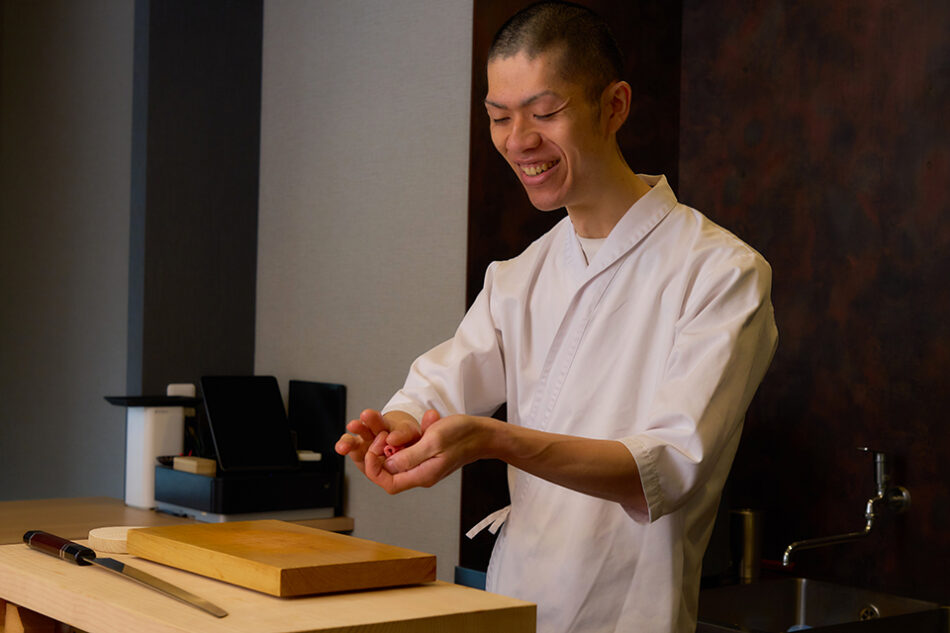
▲ Chef Ito behind the counter, carefully shaping each piece of sushi.
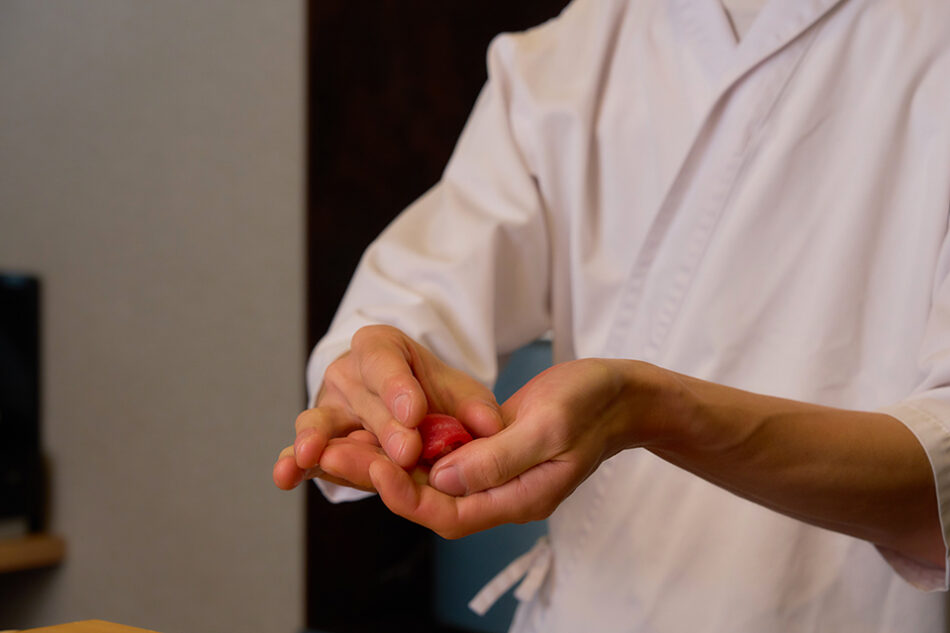
▲ Delicate hand movements bring every piece into perfect form.
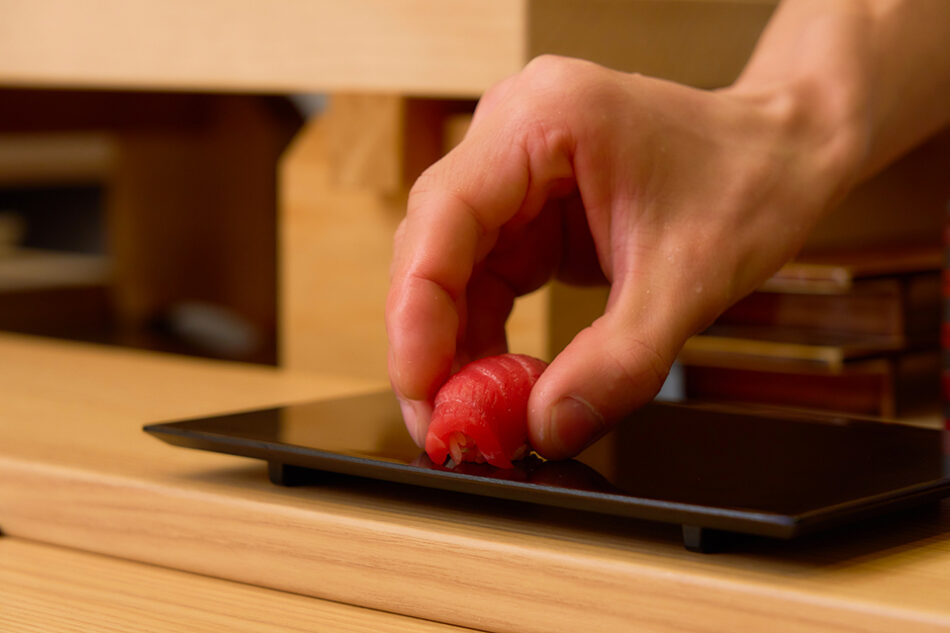
▲ The finishing touch before serving a freshly made nigiri.
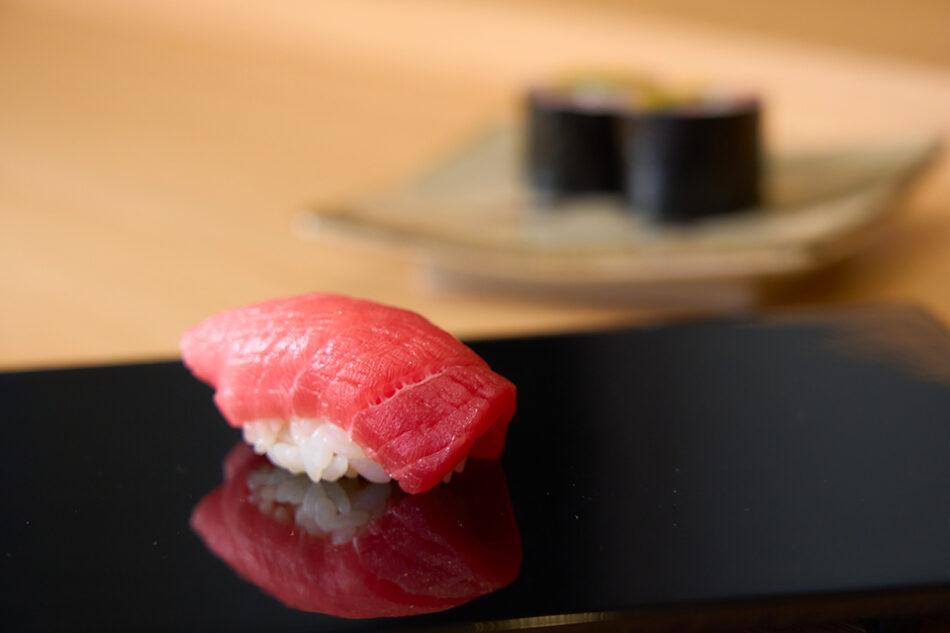
▲ A completed piece of nigiri, where fish and rice become one.
(Medium-fatty tuna served as part of the omakase course. The origin varies by season.)
An Omakase Course That Changes Every Day
At Kurofune, only omakase courses are offered.
Guests entrust the menu entirely to the chef, making every visit a unique experience.
The fish changes with the seasons, and preparation methods evolve daily.
Take tuna, for example.
Ito purchases large blocks weighing around three kilograms and cuts only what he needs each day.
The remaining portion continues to age naturally over time.
As he works through the fish, some sections may be aged for nearly two weeks.
“The umami becomes stronger, and the texture becomes more tender,” he says.
Even the same tuna changes subtly from day to day, offering new flavors as it matures.
This evolving character is one of the fascinating aspects of dining at Kurofune.
The seasonal small plates served between courses also change throughout the year.
Guests never know exactly what will appear next.
That sense of anticipation is part of what makes the omakase experience so enjoyable.
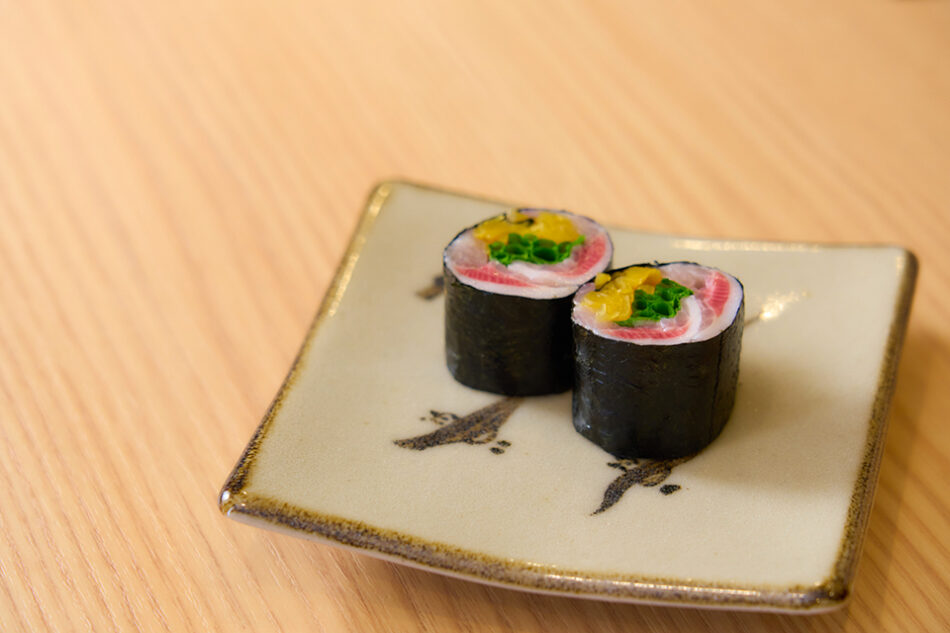
▲ Sardine Isobe Roll. Lunch courses include an appetizer, ten pieces of nigiri, and a sushi roll. Dinner courses feature five to six seasonal dishes, twelve pieces of nigiri, and a sushi roll for a highly satisfying meal.
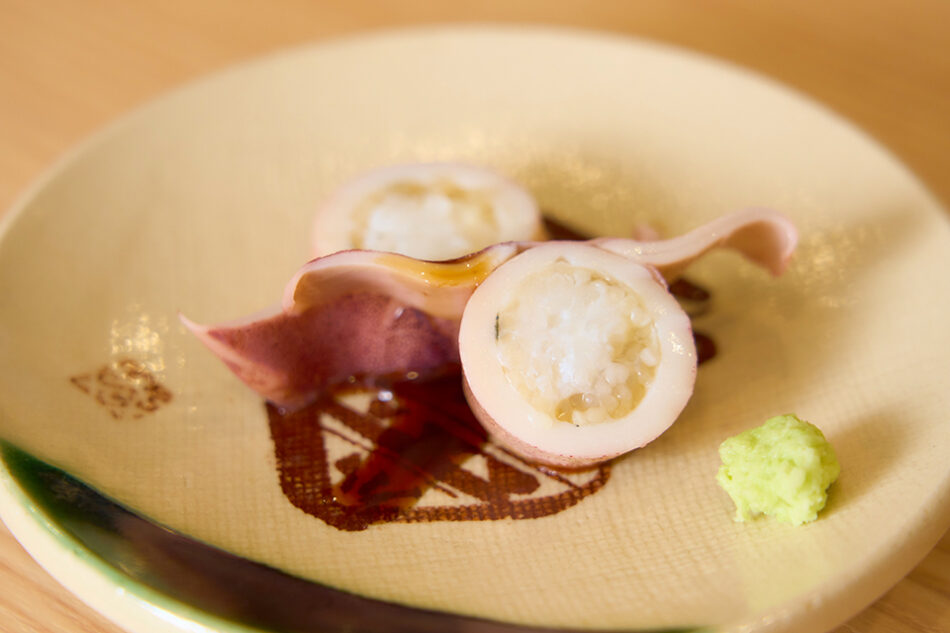
▲ Baby squid with roe. Seasonal side dishes change throughout the year.
A Special Experience Hidden in a Residential Neighborhood
A sushi restaurant with only four seats, tucked away in a quiet residential area.
It is not a place that immediately catches your eye.
Yet beyond the noren curtain lies the culmination of Chef Ito’s years of experience, technical skill, and dedication to Edomae sushi.
Guests can savor the craftsmanship behind each piece while enjoying the unhurried pace of time.
The intimate setting creates a sense of luxury that feels both personal and authentic.
Sushi Kurofune is the kind of place you find yourself wanting to visit whenever you’re looking for a truly special meal.
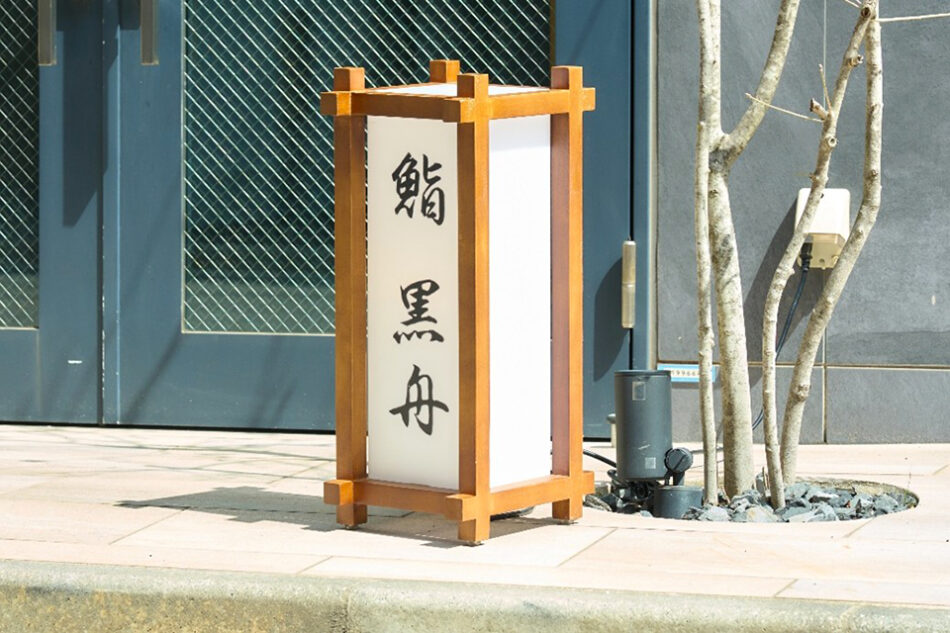
▲ The signboard placed outside during business hours. In the evening, a gentle light welcomes guests.
【After the Interview】
What impressed us most during the interview was Chef Ito’s dedication to his craft.
Whether discussing sushi or seasonal side dishes, it was clear that he is constantly thinking about one thing:
“How can I make my guests happy?”
The intimate atmosphere created by the four-seat counter, combined with the excitement of an ever-changing omakase course, makes dining here feel truly special.
As we conducted the interview, it was easy to imagine how memorable an evening at Kurofune could be.
Another detail that caught our attention was one of Chef Ito’s most important tools: his knives.
As someone who appreciates fine wood myself, I immediately noticed the handle of one particular knife.
“Could that wood possibly be…?”
When I asked, Ito smiled and replied:
“Are you familiar with wood? This one is made from snakewood.”
Snakewood is a rare and distinctive wood known for its intricate grain patterns that resemble the markings of a snake.
Its rich color and striking appearance make it difficult to look away.
When you visit Kurofune, be sure not only to watch Chef Ito’s impressive knife skills but also to take a closer look at the carefully selected tools he uses every day.
And while you’re there, don’t miss another charming detail:
the adorable owl-shaped umbrella stand by the entrance.
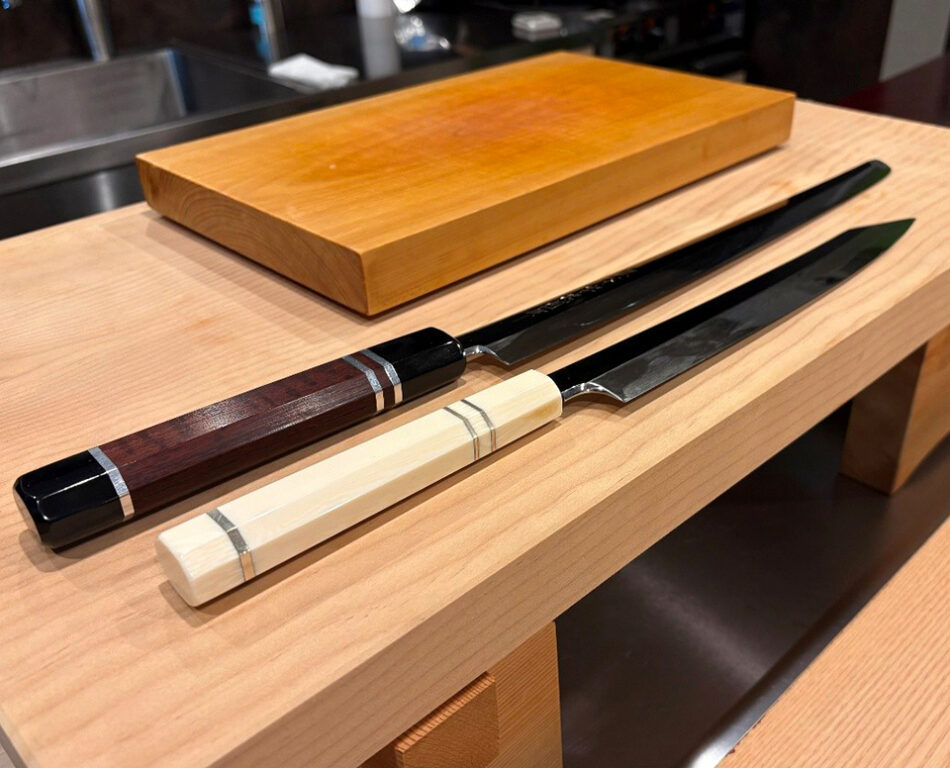
▲ One of Chef Ito’s treasured knives. The handle of the knife in the back is crafted from snakewood.
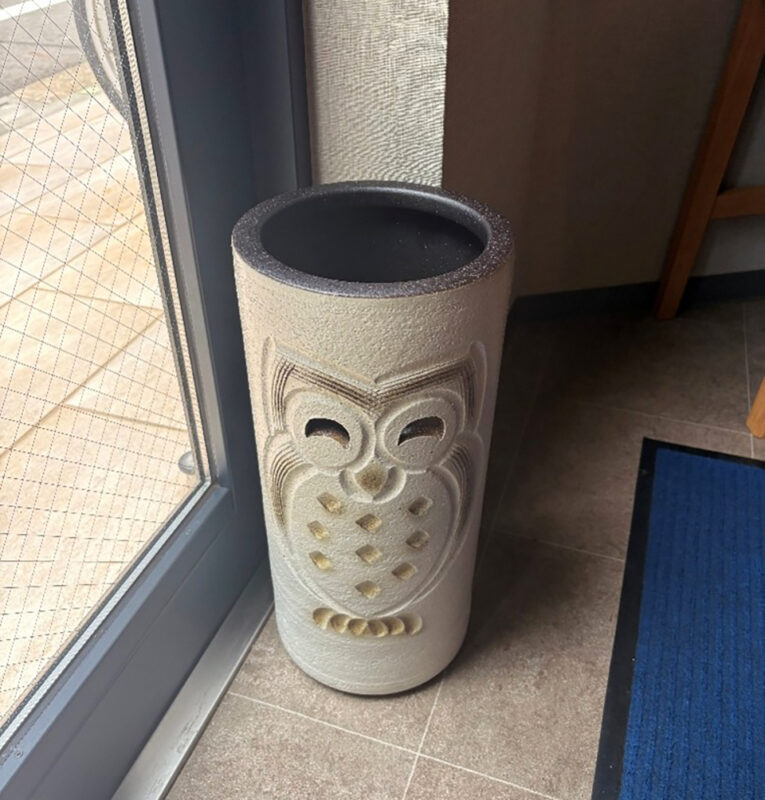
▲ The owl-shaped umbrella stand at the entrance. A small but delightful detail.
Information is current as of June 2026. Prices, business hours, and menu offerings may change. Please contact the restaurant directly for the latest information.
All prices mentioned are inclusive of tax.
※Information is based on June 2026. Prices, operating hours, and other details may change. Please verify with the class directly.
※All amounts mentioned in the article are inclusive of taxes.
