
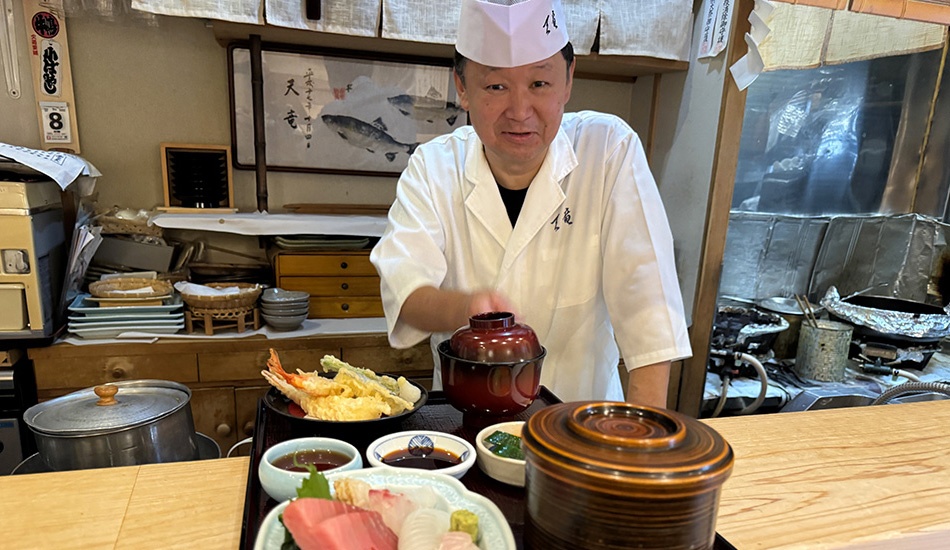
Never Compromising on Ingredients, Day or Night: Kappo Tenryu in Kiyosumi-Shirakawa
Published: November 10, 2026
※For this article, we conducted a follow-up interview and will focus on new initiatives and changes that have taken place since our previous coverage.
※Prices are subject to change from those in effect at the time of the interview. Please contact the store directly for the latest information.
A 4-minute walk from Exit A3 of Kiyosumi-Shirakawa Station.
Not far from Kiyosumi Garden, along Kiyosumi-dori, a small restaurant catches your eye as you stroll past, its entrance hung with a traditional cloth curtain. This is Kappo Tenryu.
Since opening in 2012, the restaurant has been run by the owner-chef and his wife. Kappo is a style of Japanese dining that many people imagine as formal, but there is no need to feel intimidated here. Step inside and you are greeted by the couple’s warm hospitality.
Lately, more younger customers have been coming in. Some who first visit for lunch decide to come back for dinner next time.
At midday, there is a line even on weekdays, a sign of how popular the place is. If you want to take your time, making a reservation is the safe choice.
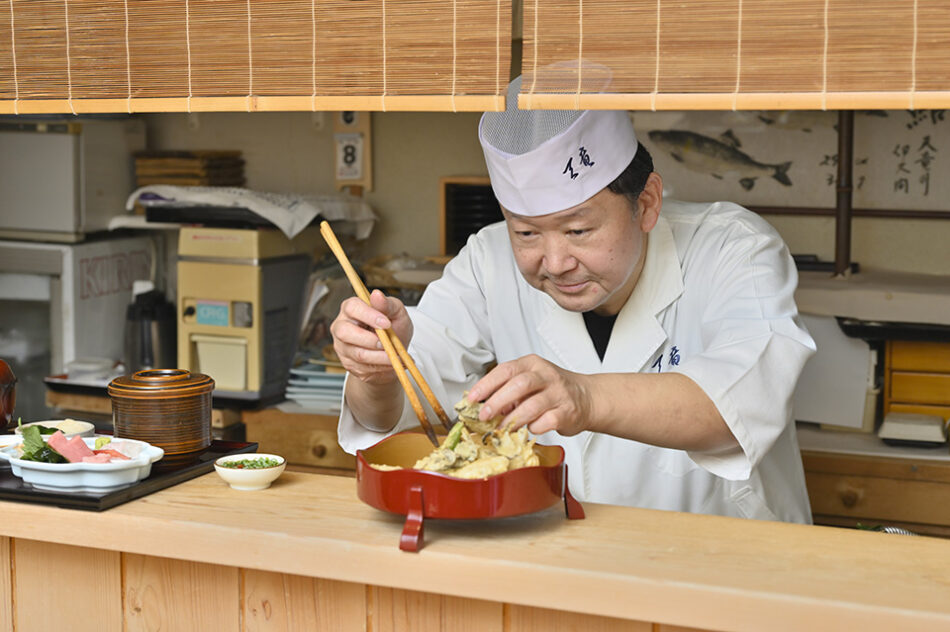
▲ Tempura fried to a crisp, plated while still piping hot. The chef’s careful work can be seen right across the counter.
■Watching Today’s Feast Come Together at the Counter
Part of the fun here is the time spent waiting for your food.
Behind the counter, the chef quietly puts each dish together. He fries the tempura, plates it, and sends it out to the dining room in one smooth motion. Watching freshly fried tempura being plated right in front of you is enough to sharpen your appetite.
The lunchtime star is the Hiru Gozen (Lunch Set), a set meal centered on sashimi and tempura, served with rice, miso soup, and more. It is a generous spread, and it is not generous by volume alone.
■“Day or Night, We Never Compromise on Ingredients”
This is the chef’s guiding principle. Just because it is lunch, he does not lower the quality of what he buys. He sources good ingredients so that customers can eat something truly delicious, and that spirit fills the Lunch Set.
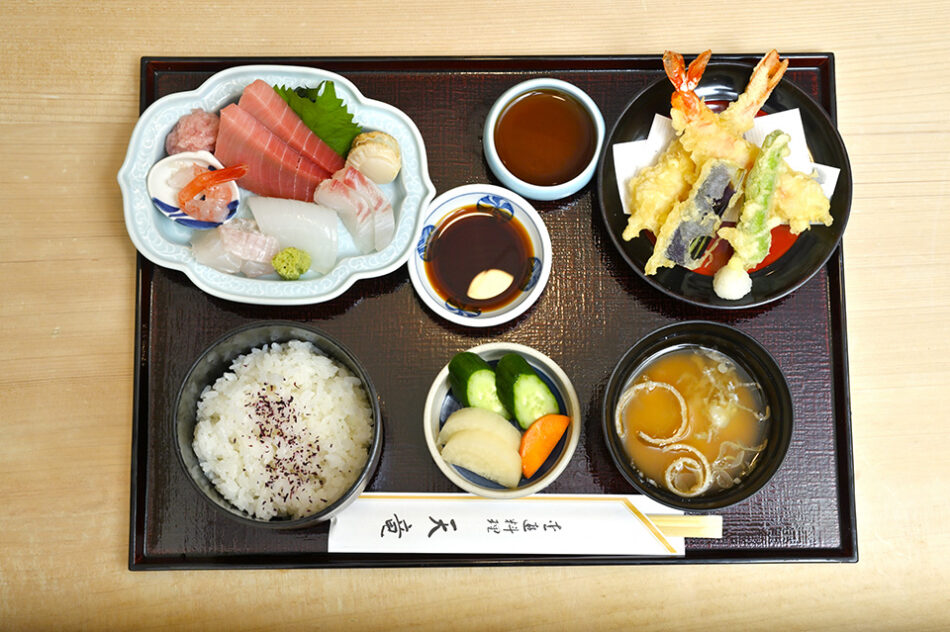
▲ Hiru Gozen (Lunch Set), 1,700 yen. Sashimi and tempura are both stars of the plate. Many people come specifically for this set, which offers plenty of high-quality seafood.
■“We Want You to Leave Full”: That Feeling Is Packed into the Lunch Set
The first thing that caught my eye on the day’s Lunch Set was the sashimi. Just looking at the seafood on the plate makes you feel you are getting a bit of a bargain for lunch.
The sashimi changes depending on what was bought that day. On this visit, it included boiled scallop, sea bream, flounder, and tuna. What will appear is always a surprise.
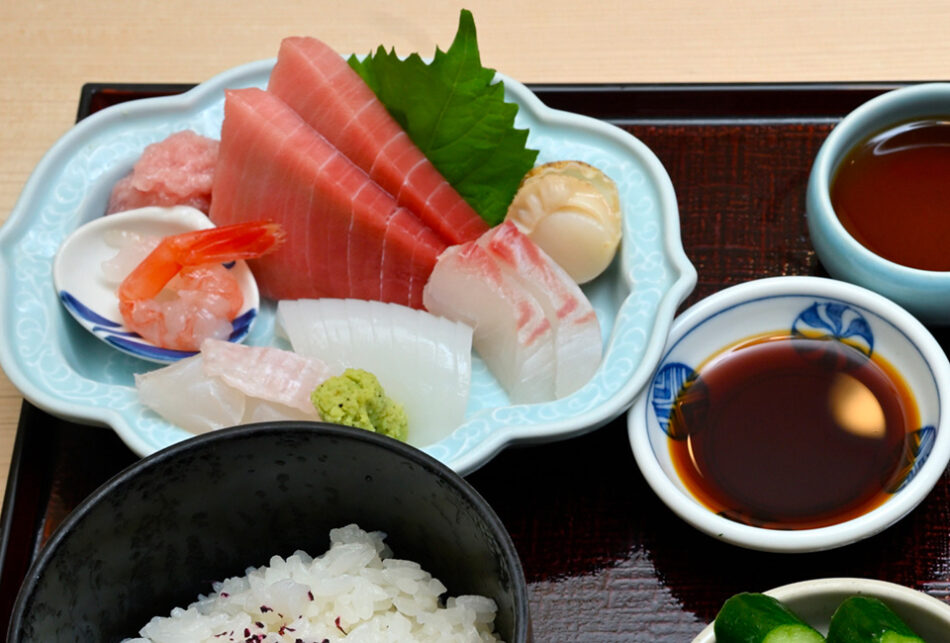
▲ Look at the thickness of this tuna! It melts on the tongue, a luxurious bite.
Standing out above all was the thick-cut tuna.
Pick up a piece with your chopsticks and its thickness is the first surprise. In your mouth, it is silky and tender. You can feel the substance of the fish, yet it melts on your tongue, and you will find yourself reaching for another slice.
Being able to enjoy this at lunch is a real treat.
But don’t stop at the sashimi. The other star, the tempura, is still to come.
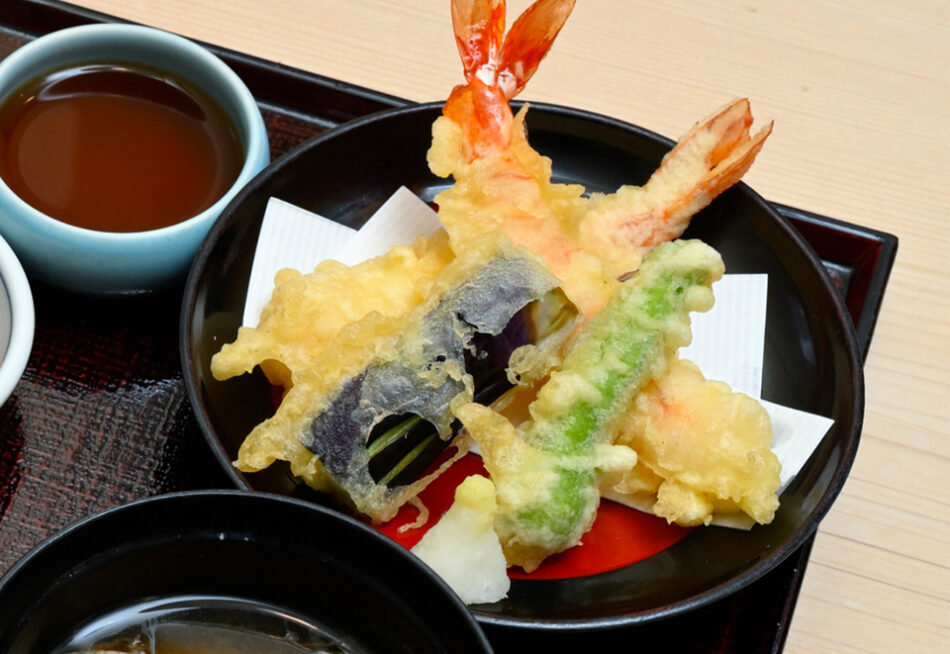
▲ The crisp tempura comes with two shrimp! It is a delight to eat it fresh and hot.
The batter is crisp and light. Two shrimp is a generous touch, too.
Take a bite of sashimi, then a mouthful of rice, then add freshly fried tempura. Of course the rice disappears quickly, and refills are free. On a day when you want a hearty lunch, this is a very reliable choice.
With food prices continuing to rise, the chef says he wants to keep prices as friendly as possible for people who work nearby.
“I want to use good ingredients. But I also want to be a place where people can eat casually.”
Because of that thinking, he does not compromise on ingredients, and the portions are substantial. By the time you are full, you may find yourself marveling again: “This is just lunch?”
■Sanriku Oysters, Tempura-Style: Seasonal Ingredients Are Best Freshly Fried
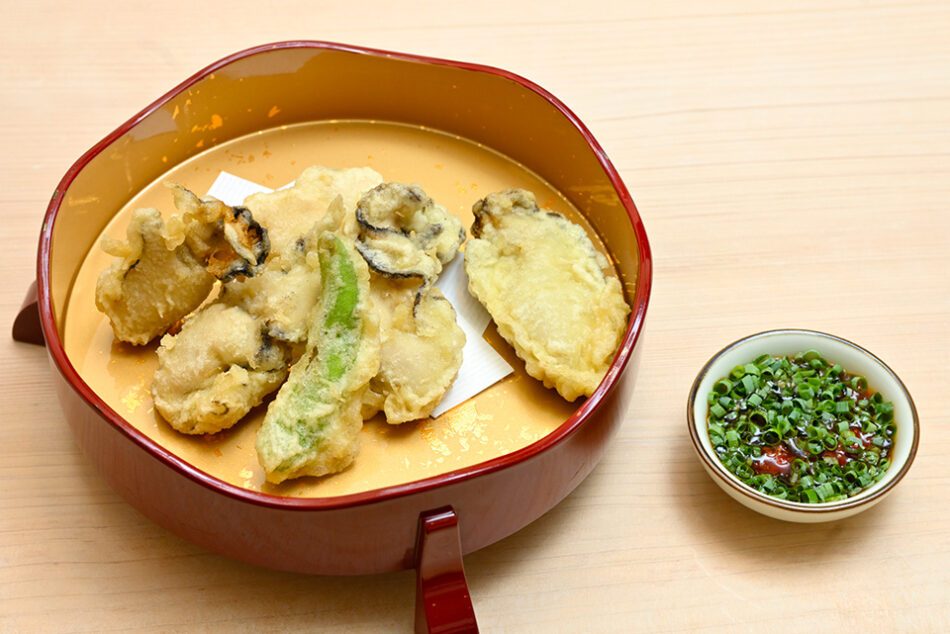
▲ The oyster’s rich flavor is sealed inside a crisp coating. Oysters from the Sanriku coast, served piping hot as tempura.
Enjoying seasonal ingredients is something kappo restaurants do especially well.
This is the Sanriku oyster tempura, made with oysters from the Sanriku coast in northeastern Japan. Break the coating with your chopsticks, and the oyster’s savory flavor floods out.
Oysters are delicious raw or grilled, but as tempura they show a different side. Bite into one while it is still hot, and you can imagine it going perfectly with rice or sake.
At lunch, it is served as a set meal with rice and miso soup. In the evening, you can also order it on its own.
Those who only visit at lunchtime may assume Kappo Tenryu is simply a lunch spot. In reality, there is much more to discover after dark.
■At Night, the Seasonal Hot Pots Take Center Stage
In the evening, the menu centers on multi-course meals that change with the seasons. Dishes made with seasonal seafood fill the table, and the season itself is a reason to visit.
From around November through winter, three types of hot pot appear: kue (longtooth grouper), fugu (pufferfish), and ankō (monkfish).
The most popular is the monkfish hot pot course.
■So Many Dishes You’ll Want to Give Up: The Monkfish Hot Pot Course, Nicknamed the “Give-Up Course”
The monkfish hot pot course costs 11,000 yen (tax included). The restaurant uses domestic monkfish, sourced from Aomori and Hokkaido.
The chef cares most about firm flesh and good flavor. Monkfish from both Aomori and Hokkaido, he says, has firm, delicious meat.
And this course really does keep the food coming.
It starts with appetizers, followed by sashimi, ankimo (monkfish liver, often called the “foie gras of the sea”), and fried monkfish. Just when you think you have finished one dish, the next one arrives. The hot pot itself waits at the very end.
“Quite a few people give up partway through,” says the chef with a laugh.
It is such a large meal that it is easy to understand why it might be nicknamed the “Give-Up Course.” Come with an empty stomach.
Hot pot courses are available for two or more people. If you are hoping to taste winter’s best, it is best to book early.
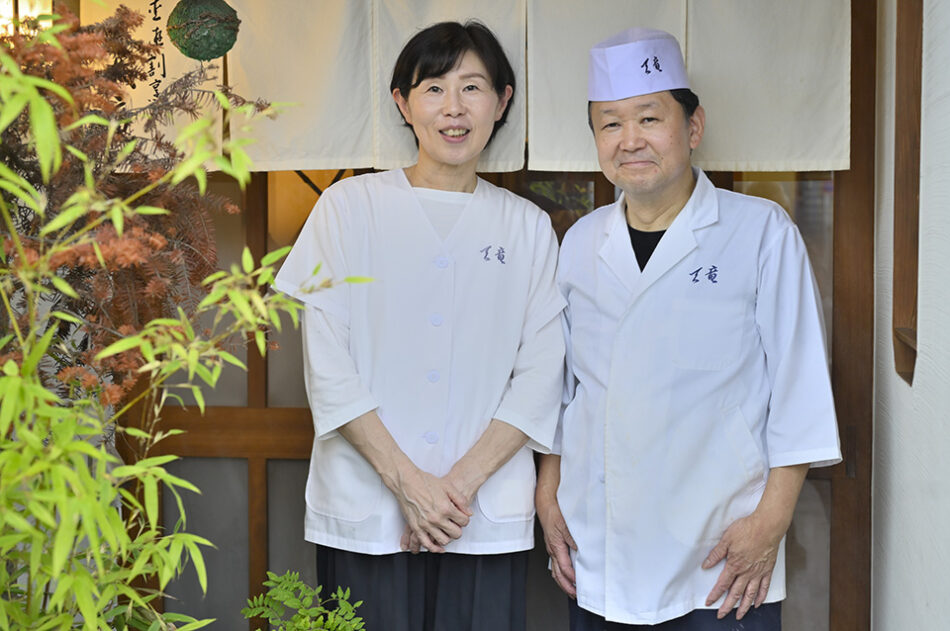
▲ The owner-chef and his wife, who run the restaurant together. Their well-coordinated teamwork supports both the cooking and the hospitality.
■“We Want You to Eat Your Fill”: The Same Spirit, Day and Night
What you feel on visiting is not only the size of the portions.
The chef’s wish that customers “eat until they are full” runs through the Lunch Set as well as the evening courses.
The restaurant is a calm space with about 15 seats, run by the chef and his wife. There are counter seats where you can watch the chef at work up close, as well as table seats for a more relaxed meal.
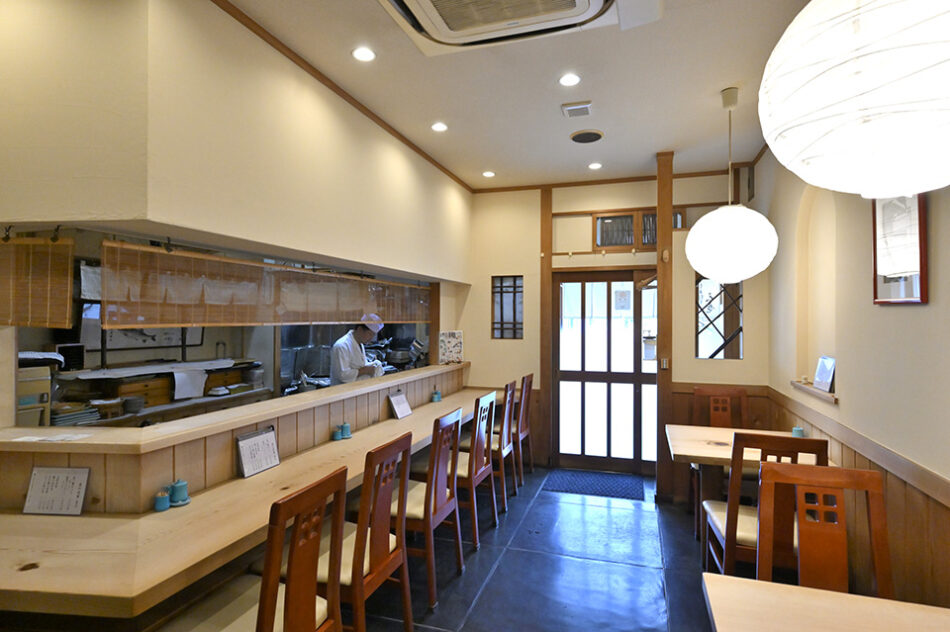
▲ A clean, comfortable interior with light wooden counters and tables.
A casual Lunch Set by day, a seasonal course by night. The experience differs, but the chef’s wish stays the same: that customers enjoy delicious food, and plenty of it.
What stays with visitors to Kappo Tenryu is a relaxed atmosphere and the deep satisfaction of finishing a meal. By day and by night, the chef uses good ingredients and spares no effort. You can feel that spirit in every dish.
If you are walking around Kiyosumi-Shirakawa, stopping in for lunch is a fine choice. Come winter, you might also visit in the evening for one of the three hot pots.
If you’re coming for the monkfish hot pot course, make sure you arrive hungry. Very hungry.
※Information is based on September 2026. Prices, operating hours, and other details may change. Please verify with the class directly.
※All amounts mentioned in the article are inclusive of taxes.
